1 in 2 Americans will get cancer. Do you know your risk?
17,000+ members · HSA/FSA eligible · 30-day risk-free




.svg)
Annual physicals catch problems after they've started. They're built around population averages — age and gender — not the hundreds of factors that are actually shaping your personal cancer trajectory.
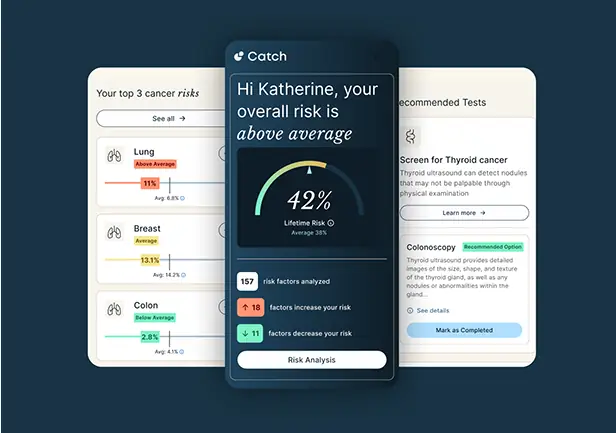
Catch was built to change that. Using peer-reviewed research from 10,000+ clinical studies, it builds a picture of your risk that's specific to you — and tells you exactly what to do about it.
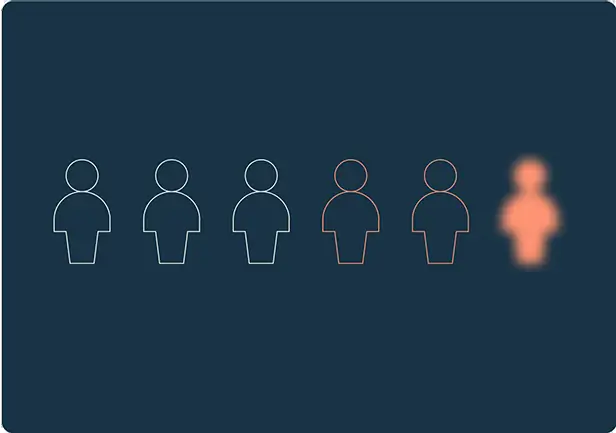
Most people know cancer is prevalent. Few understand how unevenly it's distributed — or how much of that distribution is within their control. Catch begins by showing you exactly where you stand, before anything else.
Understanding your baseline isn't about fear — it's about context. Once you know where you stand, every subsequent piece of information has somewhere meaningful to land.
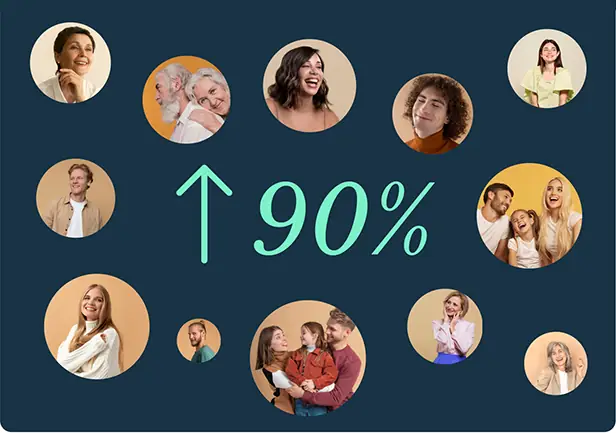
A 45-year-old woman with a family history of colorectal cancer who sleeps poorly and lives near a highway has a fundamentally different risk profile than her colleague across the hall. Generic screening guidelines don't capture this.
Over 500 factors shape your cancer risk — from what you eat to the air quality in your zip code to your genetic markers. Most annual physicals account for fewer than ten.
Catch integrates your medical history, daily habits, environmental exposures, and data from devices you already use to build a risk profile that's actually yours.
Standard screening guidelines are designed for the median patient. But if your risk is above average for a particular cancer, waiting for the standard age may mean waiting too long.
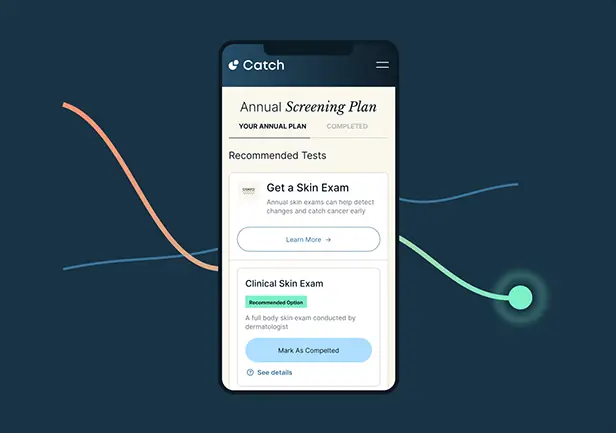
Catch builds a screening protocol tailored to your risk profile — not a one-size-fits-all schedule. It tells you which tests to prioritize, when to get them, and why each one matters for your specific situation.
This is the part most people don't know: the majority of cancer risk isn't written in your DNA. It's shaped by choices, habits, and exposures — things that can be measured and changed.
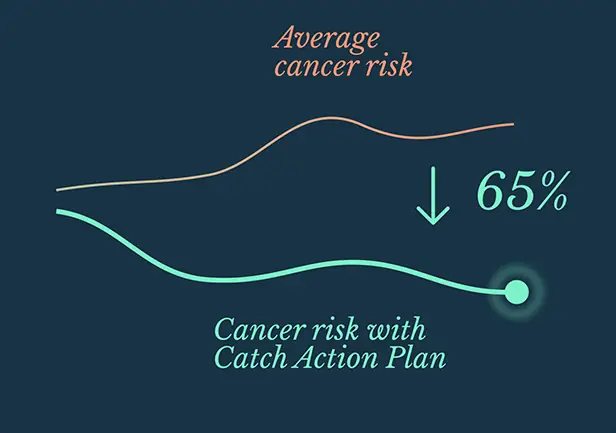
Research suggests 50–70% of cancer risk is attributable to lifestyle and environmental factors. Catch helps you find where that window is for you — specifically.
Backed by 50+ key blood biomarkers and a biological age calculation, Catch ranks the interventions most likely to move your number — so you're not guessing what to focus on.
Members who follow their Catch action plan see an average risk reduction of up to 60% within the first year.
Health data is scattered across apps, labs, doctor visits, and memory. Most people have no single place where it all comes together into something they can actually act on.
Catch consolidates your risk score, screening plan, action items, biomarkers, and historical labs into one view — updated as you make changes, so your plan stays current as your life does.


A smarter way to understand cancer risk early


Built on science, not guesswork
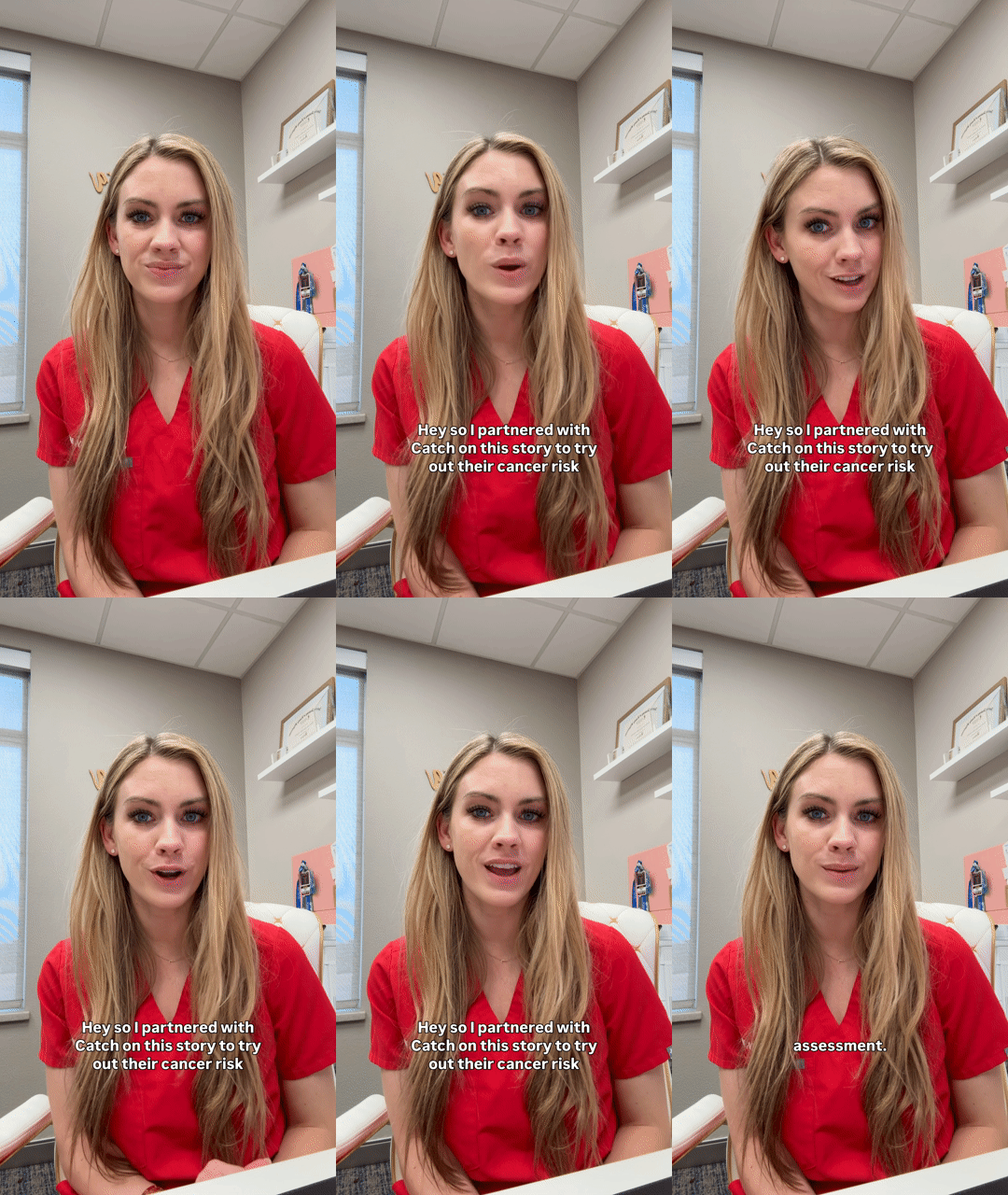
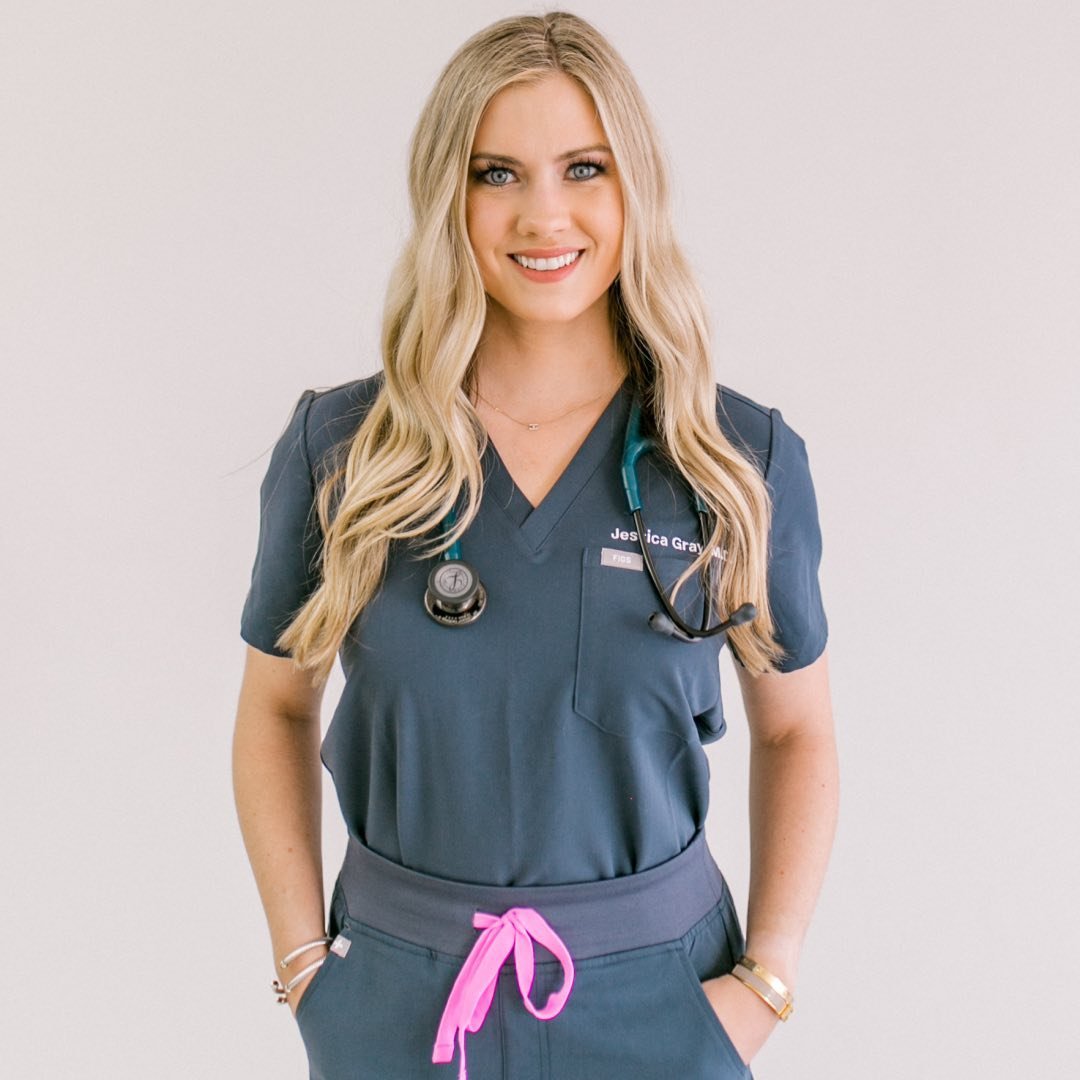
Why I recommend Catch to patients who want to be proactive


This is what modern cancer prevention looks like



The data I wish more people had before symptoms appear
Prevention starts with understanding your personal risk

Evidence based insight you can actually act on

A tool I trust for long term health decisions
Risk is measurable and often modifiable



Early insight can change long term outcomes


A better way to think about prevention



The clarity most people never get in routine care

Insight today can prevent problems tomorrow
Turning cancer research into clear next steps


The Catch program, products, and services are intended only for maintaining and encouraging a healthy lifestyle and are not to be used for the diagnosis, cure, management, prevention, or treatment of any disease or condition. The Catch membership, products, and services should never be used for medication management or dosing decisions.